

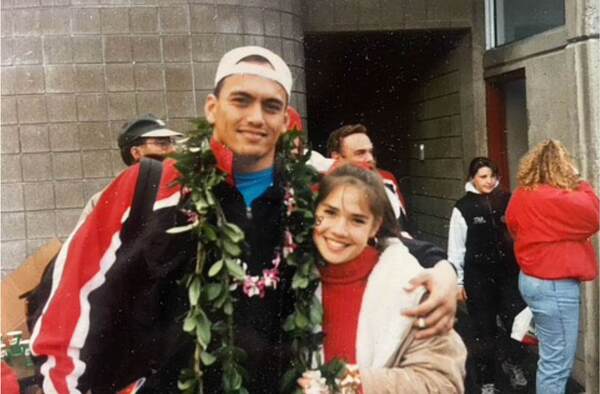
My parents both grew up in Hawai’i, but didn’t know each other until they met at the University of Utah. From an outsider's perspective, their love could seem stereotypical. My father was a football player, my mother was a cheerleader, and just like that, they fell in love. Obviously, falling in love is never that simple, and there were a lot of ups and downs, but they managed to make it work. What wasn’t so stereotypical, however, was that, in addition to being a rugged football player, my dad is a passionate artist. He loves to draw comics, portraits, and everything in between. To this day, I still catch him every once in a while, drawing away in a world of his own. This unconventional pairing of sports and art didn’t stop with my father; his two sons ended up falling in love with the same interests.
I have been drawing for as long as I can remember. One of the first things my father taught me to draw was a human being. Most young children draw people as stick figures, but he made sure that I wasn’t one of them. He taught me the “correct” way to draw a human body. I started with the “skeleton” of the person. Then, after that, I would fill in where the muscles and flesh of the body were. Lastly, I would draw the details and sort of decorations of the piece, whether it be hair, a mask, or a cape. This simple three-step method gave me a certain baseline of confidence that I knew what I had to do and wasn’t aimlessly trying to get something done.
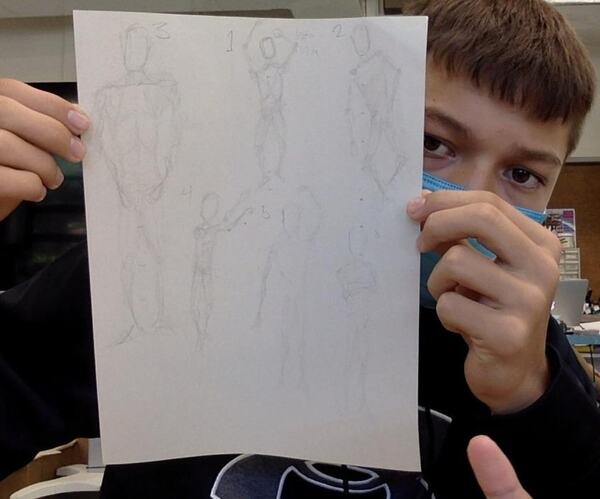
Though the steps are simple and effective, it turned out there was much more to creating a piece you could be proud of. The proportions were very difficult to get right. Whenever I’d finish a drawing, it always looked like the legs were too short, the head was too big, or some other part of the body didn’t look right. I spent countless hours of my childhood drawing and erasing until I got it right. I started looking at my drawings on my own, trying to find the mistake, then looking at them in a mirror to catch something I hadn’t seen before. I didn’t want to show my work to anyone until I thought it was perfect. I hated the feeling of thinking I'd gotten something right, only to have someone tell me it was disproportionate. With that came the overwhelming feeling of success and accomplishment when I could show a piece to my father, and he would tell me I had made the arms the right length and the head the right size. This awareness of my mistakes taught me, from a young age, to strive for an approximation of perfection because there was no better feeling than doing something flawlessly and in balance.
As I moved past this stage of my life into my teens, I became increasingly invested in art. Through middle school and high school, I would experiment with digital art, ceramics, and life drawing. Eventually, in my junior year, I took a glassblowing class. I have a love-hate relationship with glassblowing, but I don’t regret it one bit. While it is one of the most frustrating visual arts, it teaches you lessons you don’t forget.
You see, the glass shop was very hot, and the teacher was annoying. There were many days when I didn’t want to go to class. The heat of the shop and the frustration that came with the craft made glassblowing feel more like an obligation than a passion. However, no matter how I was feeling that day, once I started working, it demanded so much focus that I had no choice but to keep going.
Glassblowing is a very tedious process; all it takes is one little mistake, and your piece is completely deformed. The further along I got in my pieces, the more careful I got because I had so much more to lose. My focus would be intense, and I was moving with a sense of purpose I had never felt before. When I got to the end of my piece and messed it up, it hurt. I would think about how I had invested so much time and effort into it, only for it to break because I lost focus for a split second. While the failures stung hard, they only made my successes feel even better.
When someone sees the glass cup that I made, they only see a glass cup. I, on the other hand, see all the focus that went into it. I see the failures, the broken pieces, and the countless corrections, and I remember the excitement of finally getting it right.
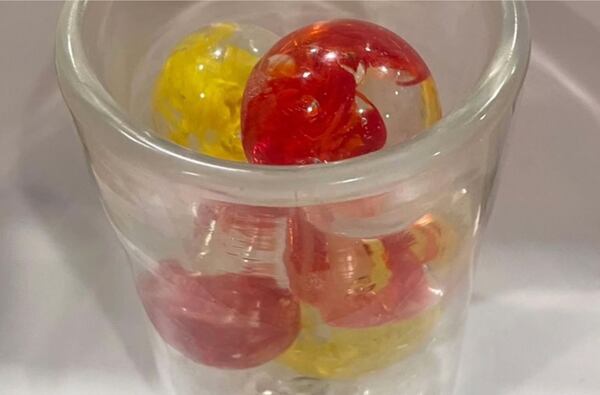
The pricelessness of the time spent on the glass cup makes the piece invaluable to me. The same can be said for other aspects of my life. Like my dad, art has been a teacher for me; football is another important one. Whenever I'm feeling discouraged, I remind myself of how important football is to me. I think about the late nights when I ran under the streetlights by myself and the mornings when I was the only one at the weight room while others were sleeping in. I think about all the failures and tears that I had to go through to get to where I am today. After all that time and effort, I would be a fool to stop loving the game before reaping the rewards of everything I had poured into it.
On the topic of rewards, my most rewarding work of art would come to me in the final semester of my senior year. I was in a painting class with Mr. Tollefson. Though I was always artistic, painting was never something that I was drawn to. The thing I didn’t like about painting was that it wasn’t nearly as easy to control as the fine tip of a pen or pencil. I struggled with it, and it wasn’t easy or fun for the longest time.

After a few months, though, I began to find comfort in painting. The different colors and techniques gave me so many directions to go in. I felt so much freedom while painting.
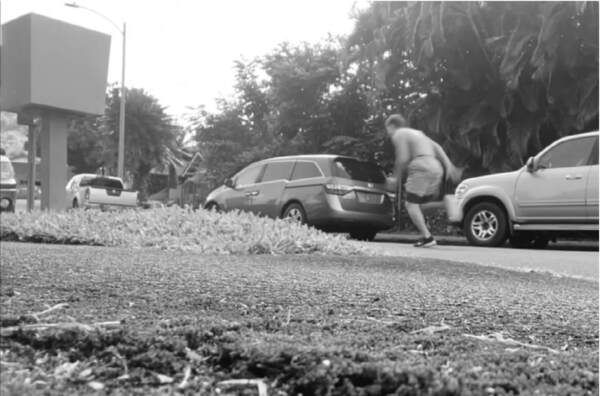
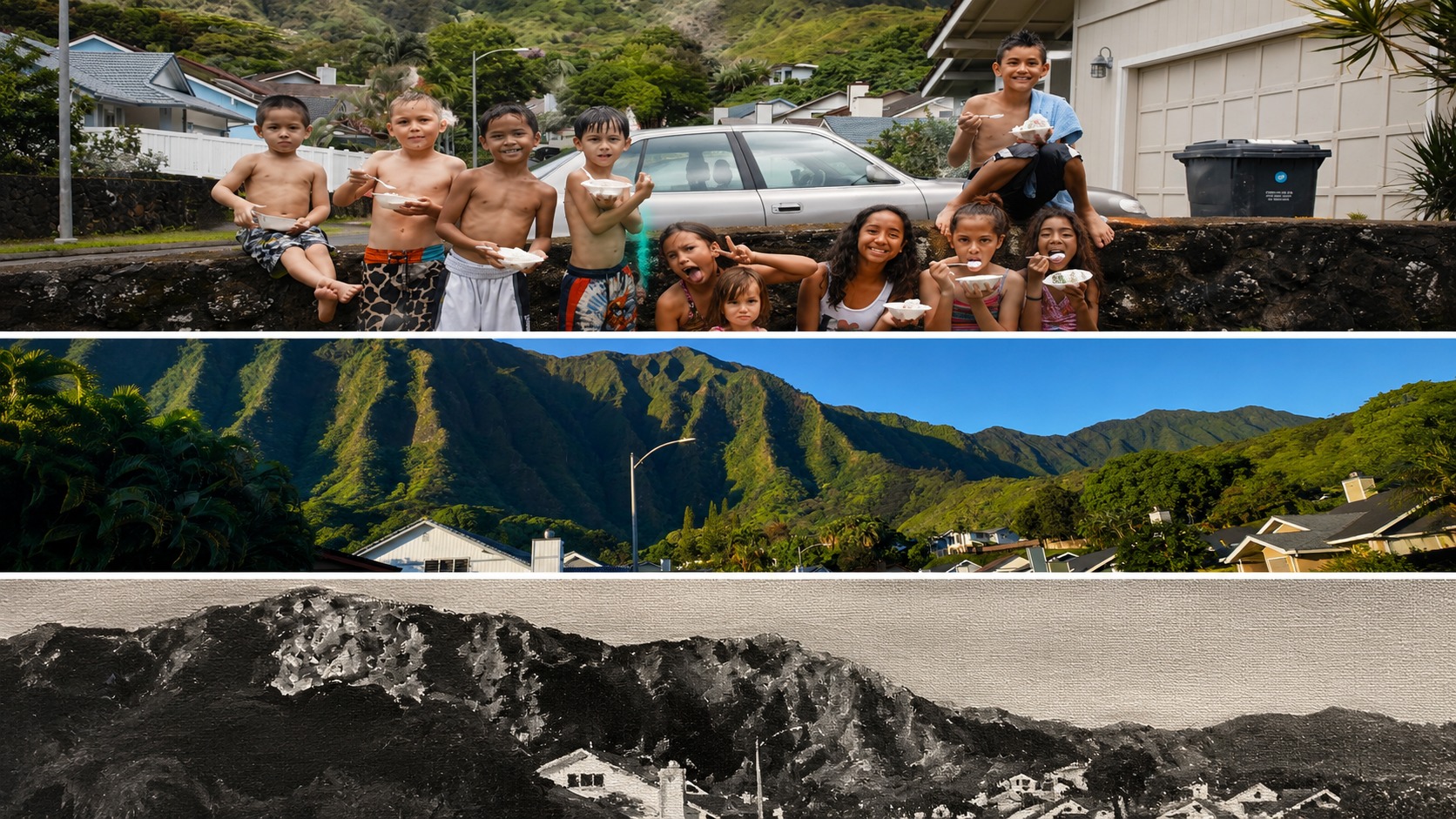
Another major assignment was to create a black-and-white painting, and I chose to depict the view from my front door. As I was painting the light pole where my cousin and I would talk for hours every day, I started reminiscing. Under that light pole is where I grew up. I painted the hill where I used to ride my bike. I painted the wall where I used to hang out with my cousins. I painted the street where I used to train with my brother, which is the same street I trained on after he left for college. I painted the curb that I broke down and cried on. It was the same curb I stood on when I cried tears of joy. I painted the mountains that have seen it all. They’ve seen the ups, the downs, and everything in between. I've always been proud of that painting, not because it is perfect, but because every part of it holds a piece of my story. Through that painting, I began to see art as a form of literacy, one that allowed me to make meaning from my experiences and share them with others.
The art in my life tells my stories. It tells of the challenges I overcame, the lessons I learned, and the values I carry with me today. Art is my literacy.
Author
